The Running
Excerpts from The Running
It started with him and his love of history, his thirst for knowledge. We still have his journals.
Or maybe it was the war. The secrets of the Civil War still damage the living, especially in haunted Spanish villages. Secrets which were better left buried, irreversible truths harming everyone he knows.
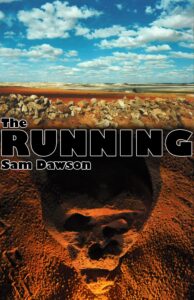
Past and present converge in a forgotten landscape, and for journalist Tom Drummond, The Running is coming. Villains and martyrs depend on who writes the history.
“There are no secrets in the village. Ever fallen in love with someone you shouldn’t have fallen in love with?”
On Elena's Village
I am being given access to a place and culture I did not know still existed. It is as though Elena has taken my hand and led me back centuries to a Spain that I believed – we all believed – was gone forever.
This is what as an outsider I would normally never see. A place that has barely moved on during centuries, an unexpected survivor of feudal Spain. Yet I am seeing it. I’m finding a different Spain to the one I thought I knew, one that I believed had passed away.

On The Spanish Civil War
Essentially there were two Spanish Civil wars. Ours – in which international volunteers went to stand, fight and die alongside their Spanish brothers and sisters, marking the first line against fascism in the sand with their own blood – and the real one. That was a war with roots sunk deep in Spanish history, fought almost wholly by Spaniards, and lost and won by Spaniards, half a million of whom died, most of them in massacres and political killings far behind the lines.

On London's 'Lost' Rivers
They were once clear springs and tumbling streams, growing as they picked up tributaries along their way to the Thames floodplain. Old engravings show them as the centrepiece of idyllic rural scenes or the site of tiny sylvan hamlets.
But London was growing too. Waterways joining the Thames made natural harbours and docks. Medieval London’s burgeoning industries were ruthless in their need for water and power. The rivers were channelled for watermills and thirsty, polluting industries. Upstream of them the water might still be clear and drinkable, but downstream it was quickly clogged with by-products and human excrement. And the unpopulated upstream was shrinking all the time.
Little by little, as the city grew, each of the rivers was pushed down and covered over. Forced into tunnels and forgotten. But they could never be stopped and they’re still there now, running in the darkness below us.

On Underground London
Beneath our feet is London’s shadowy double, a city in negative, with thoroughfares, rivers, stations and shops bathed by darkness instead of light.
It’s a second world of vaults, crypts, catacombs and charnel houses. Of 113 miles of working underground railway and 1,300 miles of Victorian sewers. All passing above, below or alongside other tunnels and spaces whose existence is denied, forgotten or lost.
In fact, they’re so tantalisingly close that by making a few connections it would be possible to roam the hidden city alone and unobserved. Passing through the doors that connect vast bomb shelters to the Northern and Central Lines, along miles of unused train tunnels, in and out of the sewers, lingering in cellars, atomic bunkers and ghost stations.
Yet, apart from the passengers on the tube and a few essential workers, it remains empty.

On George Nathan, chief of staff of the XV International Brigade, Spanish Civil War
George Nathan. Or, more correctly, Major George Montague Nathan, first commanding officer of the British Number 1 Company of anti-fascist volunteers. A languid International Brigader who dressed like the British officer he had been in the First World War.
Born in an East End Jewish family, he was fearless and utterly professional. When men were losing hope Nathan would appear, strolling in full view of the enemy, smoking his pipe, apparently invulnerable, bullets crashing around him, to urge them on: “Cheer, cheer, shout and cheer, my hearties. Give them something to fear!” No wonder they’d follow him anywhere.

Keywords
Underground London; London’s lost rivers; George Nathan; George Montague Nathan; Spanish Civil War; International Brigades; Jacob’s Island; River Fleet; River Walbrook; Trade journalism